E Minor 6th
Em6
Notes
E · G · B · C♯
Intervals
- RootE (1P)
- Minor 3rdG (3m)
- Perfect 5thB (5P)
- Major 6thC♯ (6M)
Fretboard
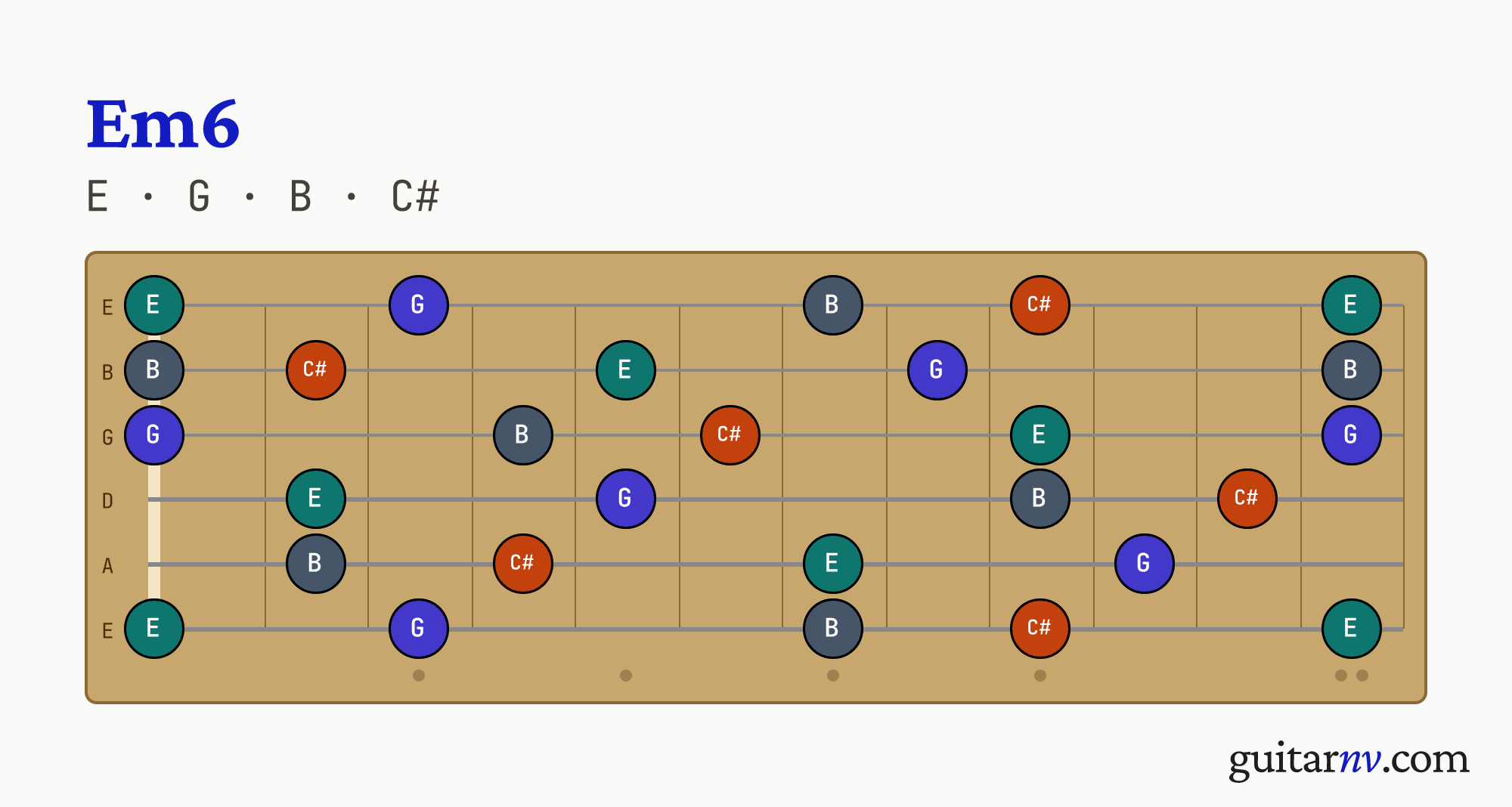
Adjust labels, frets, and palette in the interactive view.
Voicings & shapes
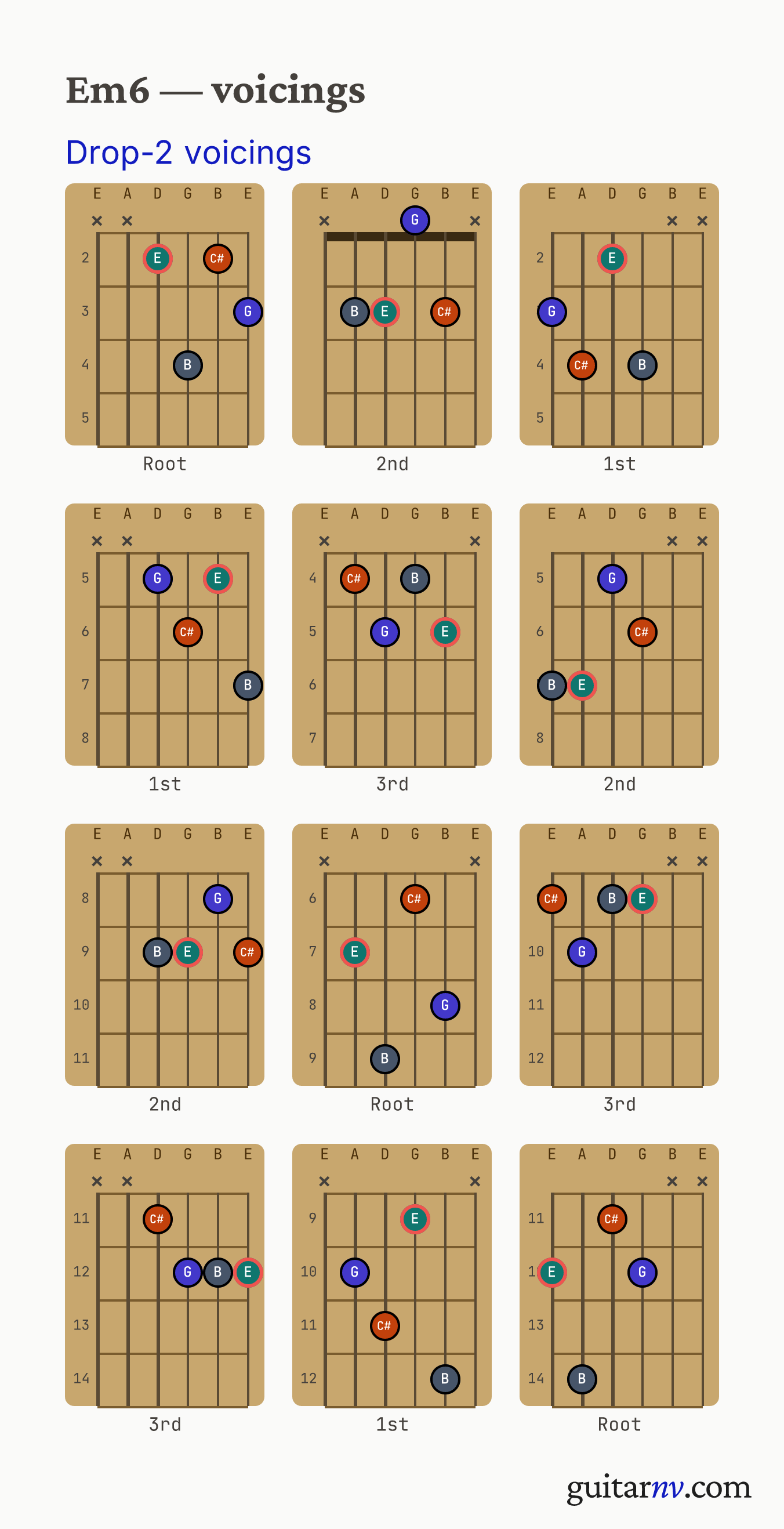
Drop-2 voicings (12)
About
The Em6 chord (E–G–B–C♯) pairs a minor third with a natural (major) sixth, creating an unusual tension between the dark minor quality and the unexpectedly bright sixth. This combination implies the melodic minor scale, where the natural 6th and natural 7th distinguish it from natural minor. The m6 chord is commonly used as a tonic minor in jazz — often preferred over Em7 when a composer wants to avoid the subdominant connotations of the ♭7. The C♯ is the chord’s defining color and must be present; the 5th can be dropped. Compared to Em7, m6 is less bluesy and more harmonically specific.
Chord diagrams
E Minor 6th voicing charts — tap a sheet to open it full size to save or print.
Similar chords
Chords sharing two or more notes with this one, ranked by overlap.
Scales containing this chord
- E Dorian (I)
- E Melodic Minor (I)
- A Mixolydian (V)
- A♭ Diminished (deg 6)
- A♭ Harmonic Minor (VI)
- B Diminished (deg 4)
- B Harmonic Minor (IV)
- B Natural Minor (IV)
- D Diminished (deg 2)
- D Major (II)
- D Melodic Minor (II)
- D♭ Blues (deg 2)
- D♭ Locrian (III)
- F Diminished (deg 8)
- F♯ Phrygian (VII)
- G Lydian (VI)
Scales whose notes include every chord tone. The Roman numeral (or scale degree) marks the chord root’s position in the scale.