A Major
Amaj
Notes
A · C♯ · E
Intervals
- RootA (1P)
- Major 3rdC♯ (3M)
- Perfect 5thE (5P)
Fretboard
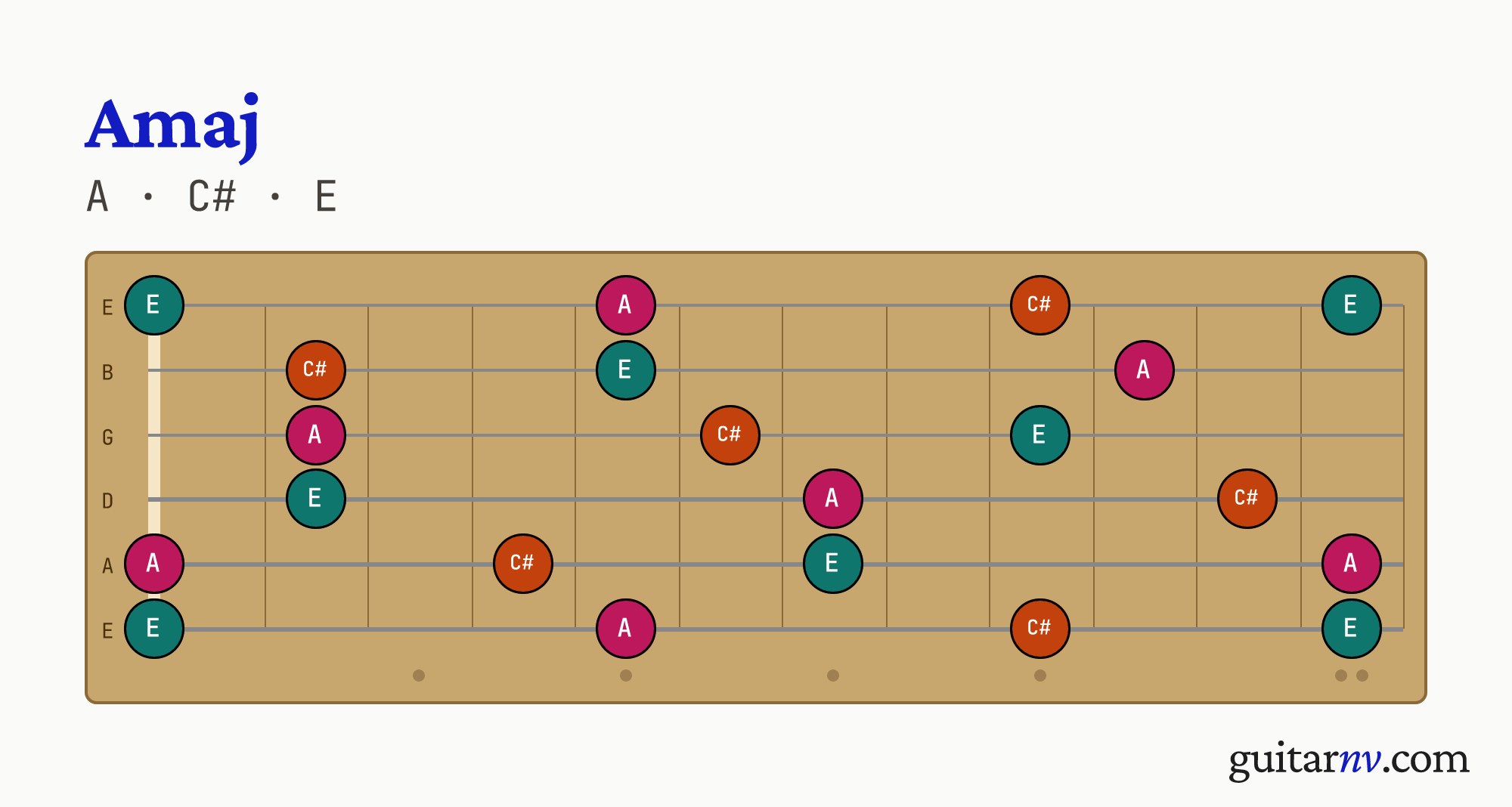
Adjust labels, frets, and palette in the interactive view.
Voicings & shapes
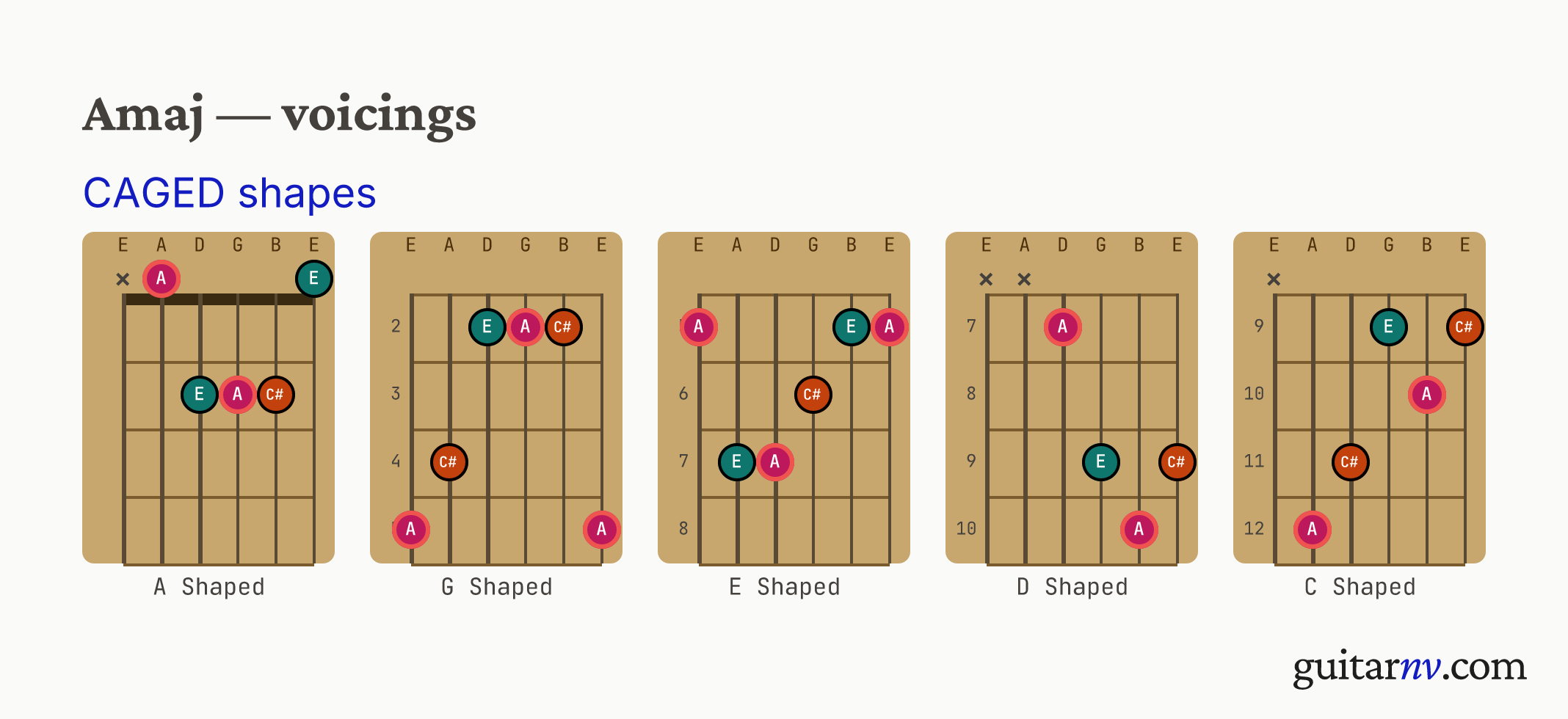
CAGED shapes (5)
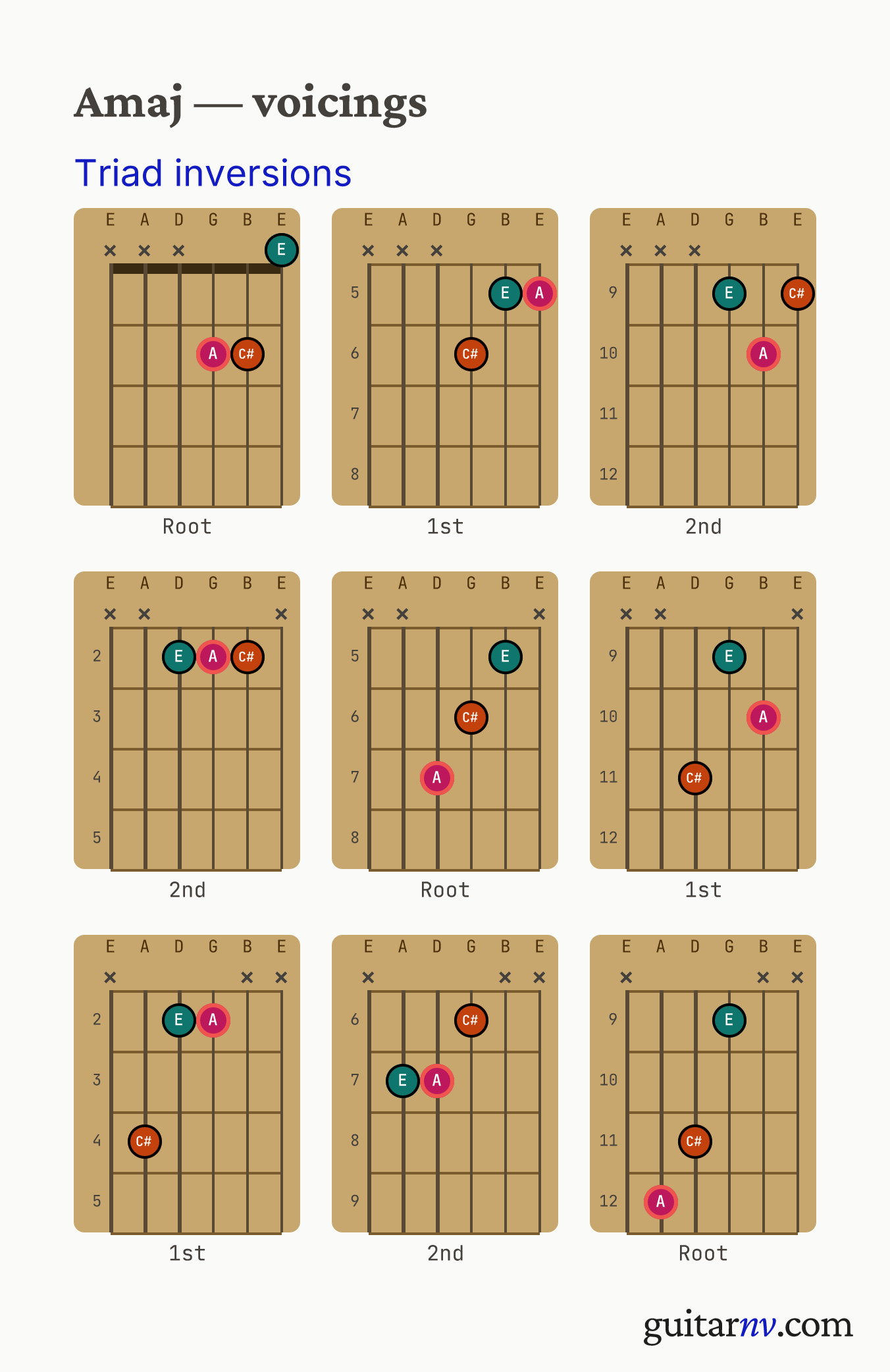
Triad inversions (9)
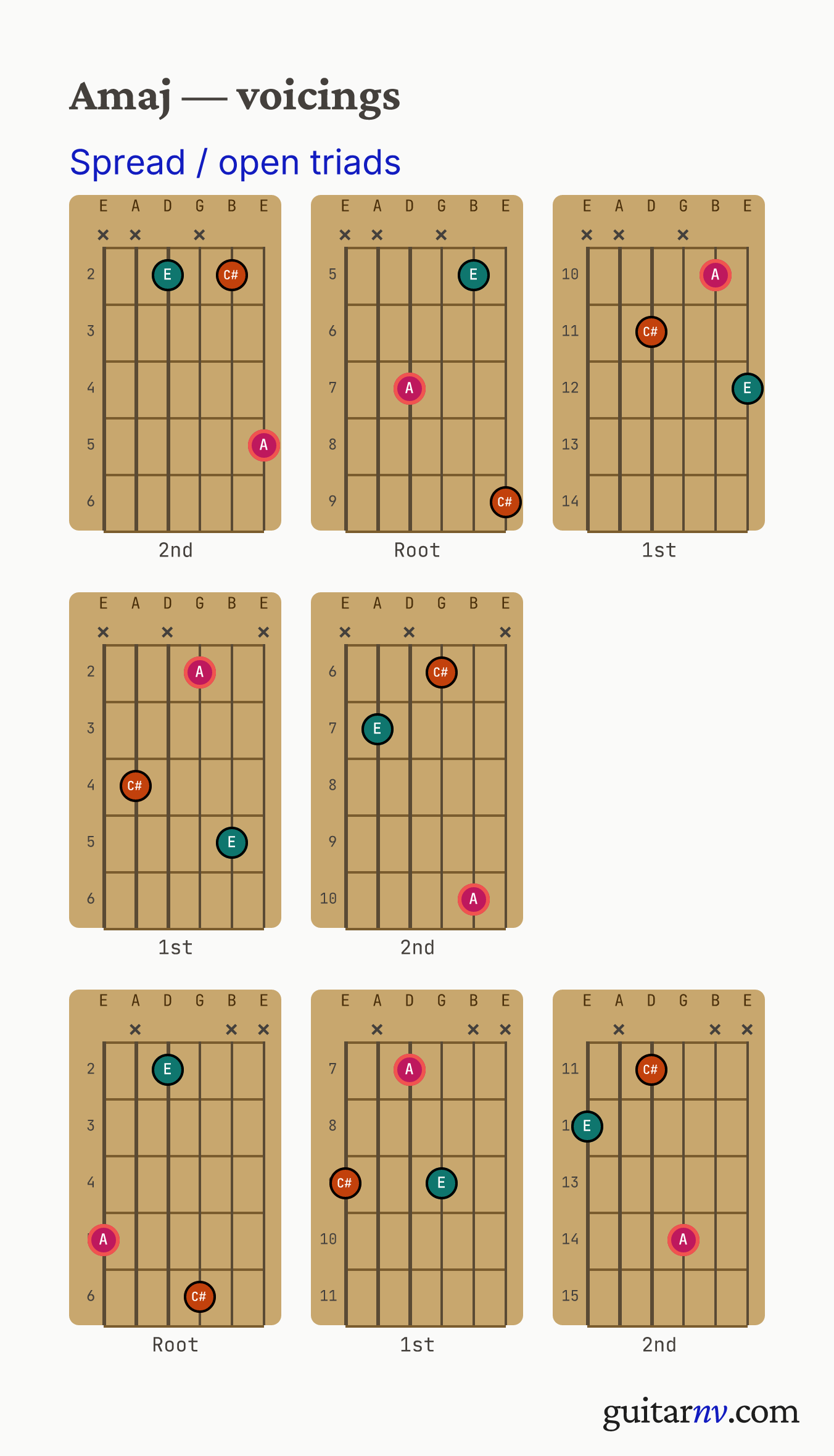
Spread / open triads (8)
About
The A major triad (A–C♯–E) is built from a root, major third, and perfect fifth. Its stability comes from the perfect fifth — the strongest consonant interval — anchored by the major third that gives it its bright, open character. It serves as the tonal center (I chord) in A major and the target of resolution from the dominant. Common moves include A–D–E (I–IV–V) and the E7–A cadence (V–I) that defines tonal music. On guitar, the fifth can be doubled or omitted in dense voicings without losing identity, but the major third (C♯) is indispensable — it is the one note distinguishing major from minor and from a power chord. Compared to Am, the raised third is the entire difference in color.
Chord diagrams
A Major voicing charts — tap a sheet to open it full size to save or print.
Similar chords
Chords sharing two or more notes with this one, ranked by overlap.
Scales containing this chord
- A Lydian (I)
- A Major (I)
- A Major Pentatonic (deg 1)
- A Mixolydian (I)
- A♭ Locrian (II)
- A♭ Phrygian (II)
- B Dorian (VII)
- B Mixolydian (VII)
- B Natural Minor (VII)
- B♭ Diminished (deg 8)
- D Harmonic Minor (V)
- D Lydian (V)
- D Major (V)
- D Melodic Minor (V)
- D♭ Diminished (deg 6)
- D♭ Harmonic Minor (VI)
- D♭ Locrian (VI)
- D♭ Natural Minor (VI)
- D♭ Phrygian (VI)
- E Diminished (deg 4)
- E Dorian (IV)
- E Major (IV)
- E Melodic Minor (IV)
- E Mixolydian (IV)
- E♭ Locrian (V)
- F♯ Blues (deg 2)
- F♯ Dorian (III)
- F♯ Minor Pentatonic (deg 2)
- F♯ Natural Minor (III)
- F♯ Phrygian (III)
- G Diminished (deg 2)
- G Lydian (II)
Scales whose notes include every chord tone. The Roman numeral (or scale degree) marks the chord root’s position in the scale.